
The Close Relationship Between High-Quality Plastic Products and Molds
In the modern manufacturing industry, plastic products have penetrated every aspect of daily life and industrial production, ranging from small daily necessities to precision components in automotive, electronics, and medical equipment. The quality of plastic products is directly determined by many factors, among which the mold, known as the "mother of manufacturing", plays an irreplaceable and decisive role. A high-quality, well-designed mold is the fundamental prerequisite for producing high-performance, high-precision, and high-stability plastic products, and the two form an inseparable and mutually promoting relationship.
First and foremost, mold design is the cornerstone of ensuring the quality of plastic products. The structural design of the mold, including gate location, runner system, cooling system, and venting structure, directly affects the forming quality of plastic parts. Reasonable gate design can ensure the uniform filling of molten plastic into the mold cavity, avoiding common quality defects such as flow marks, weld lines, and short shots caused by unbalanced material flow. A scientific cooling system design enables the plastic to cool and solidify evenly in the mold, effectively reducing internal stress, preventing product warpage, shrinkage, and deformation, and guaranteeing the dimensional stability of plastic products. In addition, a complete venting structure can smoothly discharge the gas inside the mold cavity during the injection molding process, avoiding defects like air traps, burn marks, and surface voids, thus ensuring the smoothness and integrity of the product surface.
Mold processing accuracy directly determines the dimensional accuracy and assembly performance of plastic products. Molds are precision tools, and their own machining tolerances, surface smoothness, and matching accuracy will be completely replicated on plastic products. High-precision mold cavities and cores, processed by advanced CNC machining and precision grinding equipment, can achieve extremely tight dimensional tolerances and smooth surface finishes. This ensures that each plastic product produced has consistent dimensions and a flawless appearance, meeting the strict assembly requirements of finished products. Conversely, molds with low processing accuracy will lead to large dimensional deviations of plastic products, rough surfaces, and poor fitting with other components, seriously reducing the usability and quality grade of the products. Even a tiny error in mold processing can cause a large number of defective plastic products, resulting in huge production losses.
The material selection and durability of molds are also crucial to the long-ter
m stability of plastic product quality. High-quality molds usually use wear-resistant, corrosion-resistant, and high-strength tool steels, which can withstand the high pressure and high temperature of long-term repeated injection molding, maintain the stability of mold structure and dimensional accuracy, and avoid mold wear, deformation, and damage during mass production. A durable mold can ensure that thousands or even millions of continuously produced plastic products maintain consistent quality without obvious differences in size, appearance, and performance. In contrast, molds made of inferior materials are prone to wear and deformation after short-term use, leading to continuous decline in product quality, frequent production interruptions, and increased production costs.
Furthermore, regular maintenance and upkeep of molds are important guarantees for sustaining high-quality plastic product production. During long-term use, molds will inevitably accumulate residual plastic, wear of moving parts, and blockage of cooling channels. Timely cleaning, polishing, lubrication, and maintenance of the mold can keep the mold in optimal working condition, prevent quality problems caused by mold failures, and extend the service life of the mold. Only by maintaining the good performance of the mold can we ensure that each batch of plastic products meets quality standards, avoid fluctuations in product quality, and achieve efficient and stable mass production.
In conclusion, molds are the core carrier for forming plastic products, and every detail of the mold is closely linked to the quality of plastic products. High-quality plastic products are inseparable from well-designed, high-precision, durable, and well-maintained molds. For plastic manufacturing enterprises, investing in high-quality molds and strengthening mold management and maintenance is not only a way to improve product quality and reduce defective rates but also an important strategy to enhance market competitiveness and achieve sustainable development. In the future development of the plastic industry, the continuous innovation and upgrading of mold technology will continue to drive the improvement of plastic product quality, promoting the entire industry to move towards higher precision, higher performance, and higher efficiency.
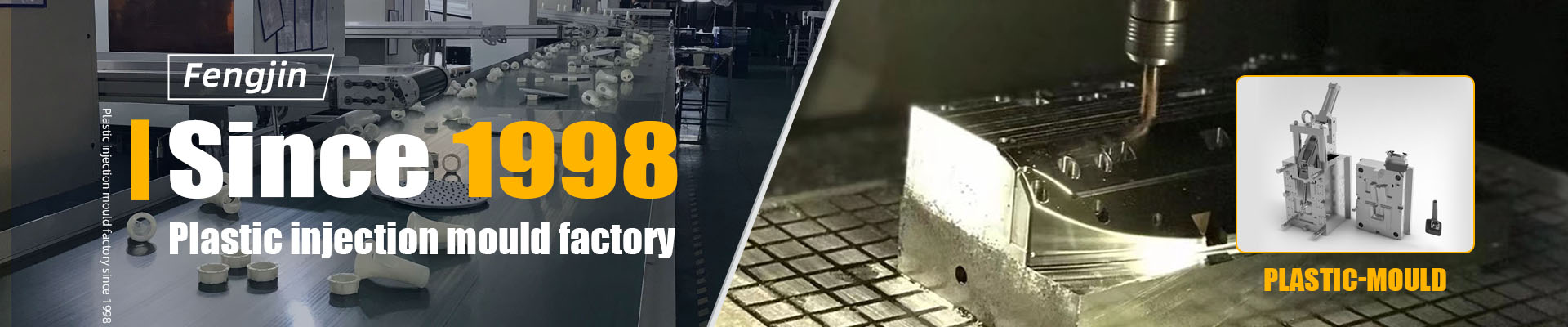
Xiamen fengjin mold industry is main to offer top quality in xiamen city,China.You can see from the pic i attached on top the mould is thickness.And mould material is great.
